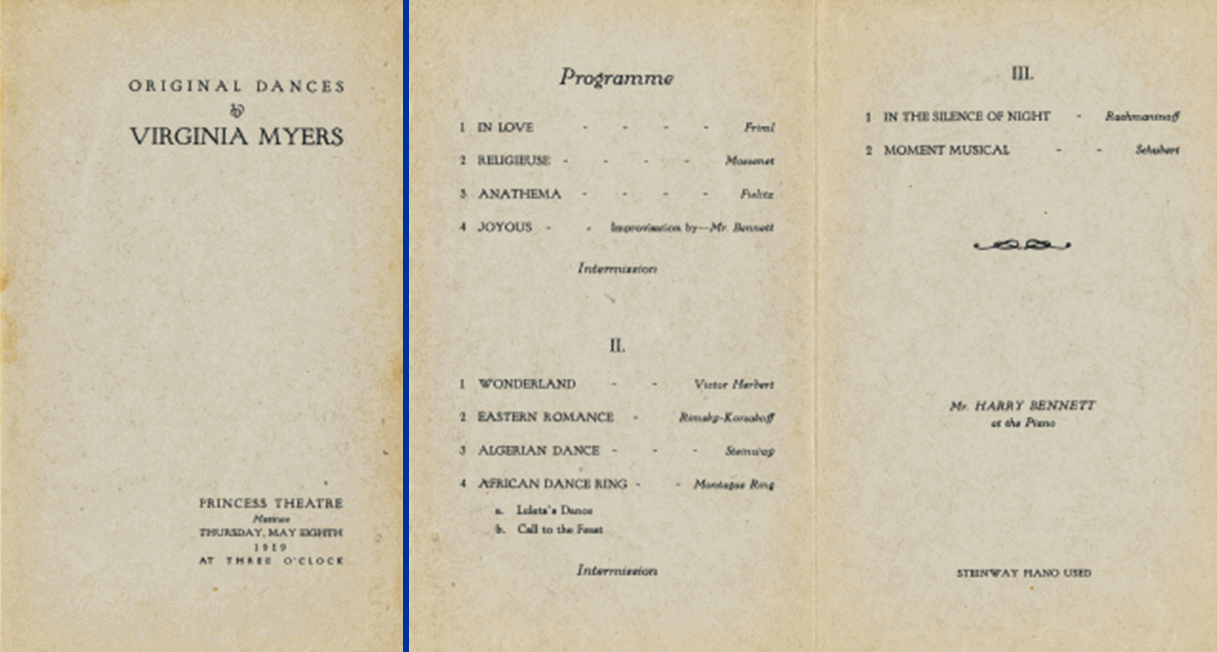
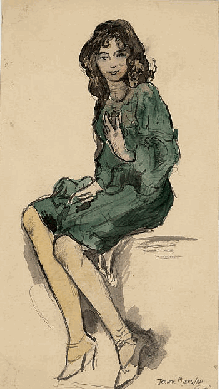
|
|
|
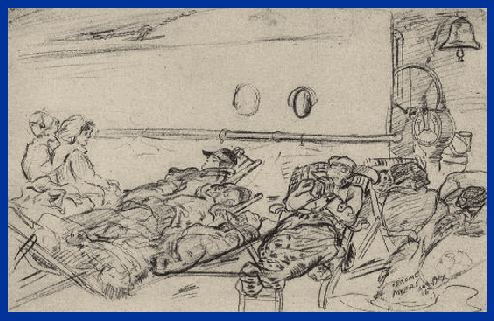
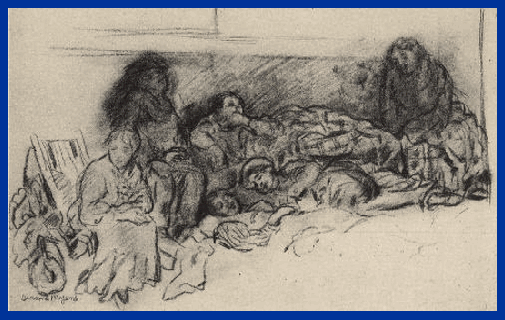
THE JOURNEY
|
|
|
|
|
|
|
|
|
|
|
|
|
|
(The Morning Telegraph Art Magazine, 1912)
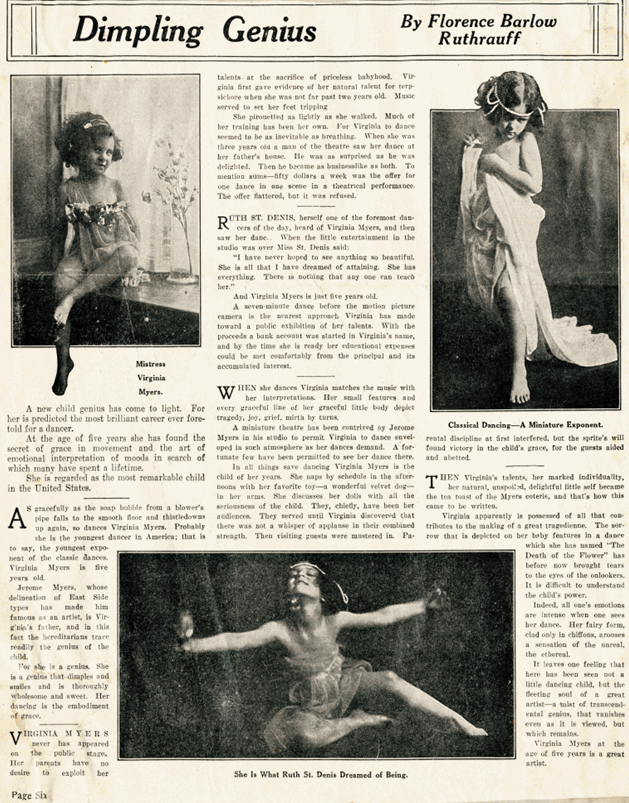
DIMPLING GENIUS by Florence Barlow Ruthrauff
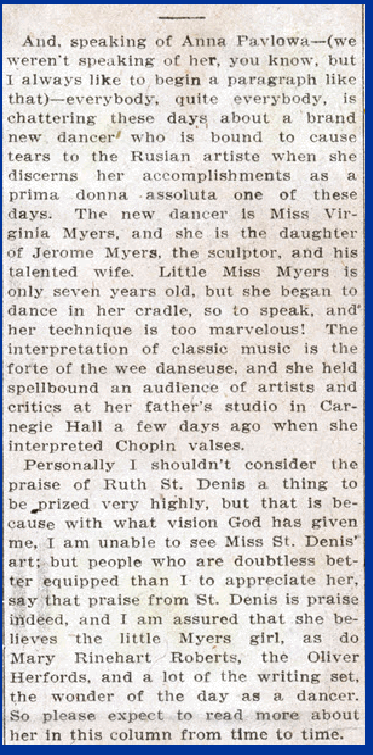
A new child genius has come to light. For her is predicted the most brilliant career ever foretold for a dancer.
At the age of five years she has found the secret of grace in movement and the art of emotional interpretation of moods in search of which many have spent a lifetime.
She is regarded as the most remarkable child in the United States.
As gracefully as the soap bubble from a blower’s pipe falls to the smooth floor and thistledowns up again, so dances Virginia Myers. Probably she is the youngest dancer in America; that is to say, the youngest exponent of the classic dances. Virginia Myers is five years old.
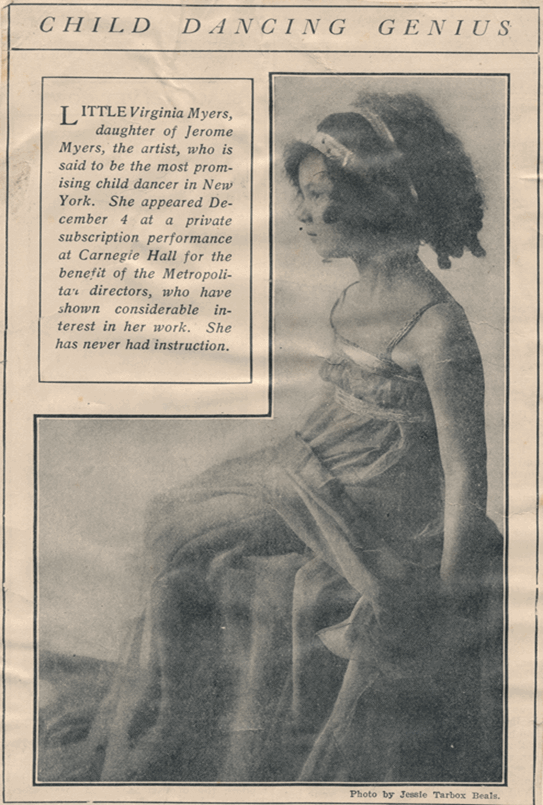
Jerome Myers, whose delineation of East Side types has made him famous as an artist, is Virginia’s father, and in this fact the hereditarians trace readily the genius of the child.
For she is a genius. She is a genius that dimples and smiles and is thoroughly wholesome and sweet. Her dancing is the embodiment of grace.
VIRGINIA MYERS never has appeared on the public stage. Her parents have no desire to exploit her talents at the sacrifice of priceless babyhood. Virginia first gave evidence of her natural talent for Terpsichore when she was not far past two years old. Music served to set her feet tripping.
She pirouetted as lightly as she walked. Much of her training has been her own. For Virginia to dance seemed to be as inevitable as breathing. When she was three years old a man of the theatre saw her dance at her father’s house. He was as surprised as he was delighted. Then he became as businesslike as both. To mention sums “fifty dollars a week” was the offer for one dance in one scene in a theatrical performance. The offer flattered, but it was refused.
RUTH ST. DENIS, herself one of the foremost dancers of the day, heard of Virginia Myers, and then saw her dance. When the little entertainment in the studio was over Miss St. Denis said:
“I have never hoped to see anything so beautiful. She is all that I have dreamed of attaining. She has everything. There is nothing that anyone can teach her.”
And Virginia Myers is just five years old.
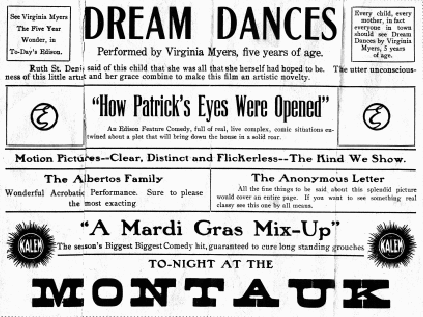
A twenty-minute dance before the motion picture camera is the nearest approach Virginia has made toward a public exhibition of her talents. With the proceeds a bank account was started in Virginia’s name, and by the time she is ready her educational expenses could be met comfortably from the principal and its accumulated interest.
Then Virginia’s talents, her marked individuality, her natural, unspoiled, delightful little self became the tea toast of the Myers coterie, and that’s how this came to be written.
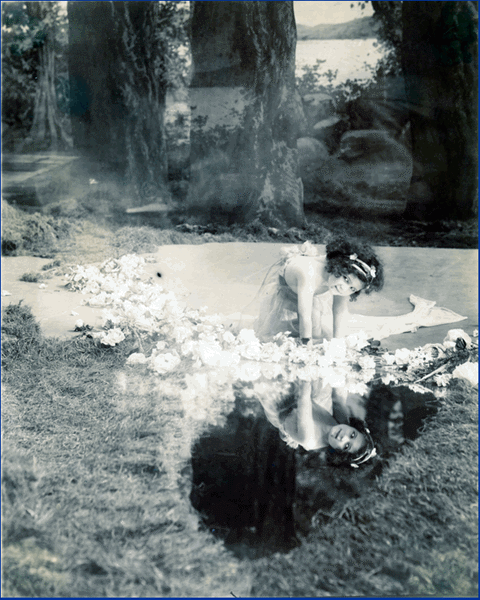
Virginia apparently is possessed of all that contributes to the making of a great tragedienne. The sorrow that is depicted on her baby features in a dance which she has named “The Death of the Flower” has before now brought tears to the eyes of the onlookers. It is difficult to understand the child’s power.
Indeed, all one’s emotions are intense when one sees her dance. Her fairy form, clad only in chiffons, arouses a sensation of the unreal, the ethereal.
It leaves one feeling that here has been seen not a little dancing child, but the fleeting soul of a great artist a mist of transcendental genius, that vanished even as it is viewed, but which remains.
Virginia Myers at the age of five years is a great artist.
|
|
|
 |
|
|
|
|
 |
|
|
|
|
|
|
|
|
|
|
|
|
|
|
|
|
|
|
|
|
|
|
 |
|
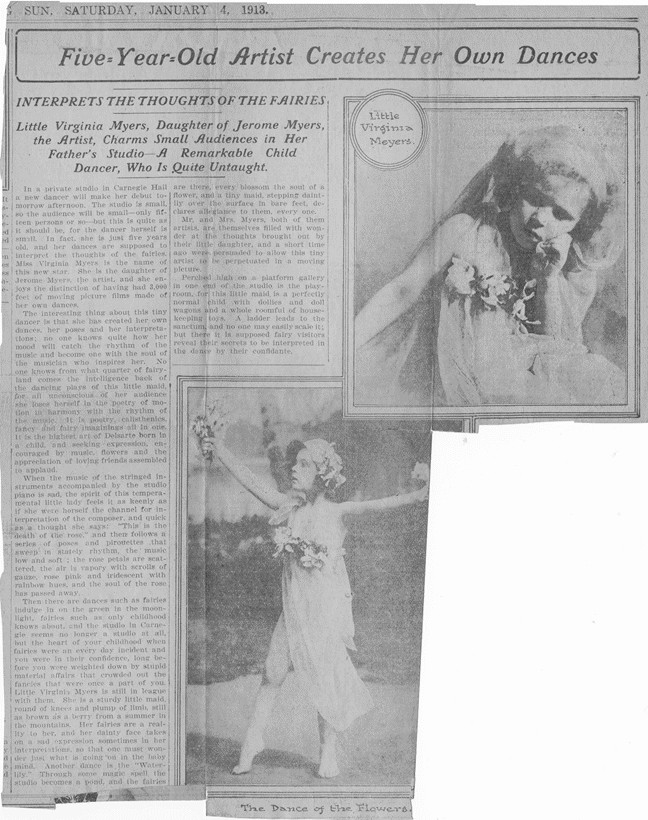
FIVE-YEAR-OLD ARTIST CREATES HER OWN DANCES
Little Virginia Myers, Daughter of Jerome Myers, the Artist, Charms Small Audiences
in Her Father’s Studio–A Remarkable Child Dancer, Who Is Quite Untaught
In a private studio in Carnegie Hall a new dancer will make her debut tomorrow afternoon. The studio is small, so the audience will be small–only fifteen persons or so–but this is quite as it should be, for the dancer herself is small. In fact, she is just five years old, and her dances are supposed to interject the thoughts of the fairies. Miss Virginia Myers is the name of this new star. She is the daughter of Jerome Myers, the artist, and she enjoys the distinction of having had 3,000 feet of motion picture films made of her own dances.
The interesting thing about this tiny dancer is that she has created her own dances, her poses and her interpretations; no one knows quite how her mood will catch the rhythm of the music and become one with the soul of the musician who inspires her. No one knows from what quarter of fairyland comes the intelligence back of the dancing plays of this little maid, for all her unconscious of her audience she loses herself in the poetry of motion in harmony with the rhythm of the music. It is poetry, calisthenics, fancy and fairy imaginings all in one. It is the highest art of Delsarte born in a child, and seeking expression, encouraged by music, flowers and the appreciation of loving friends assembled to applaud.
When the music of the stringed instruments accompanied by the studio piano is sad, the spirit of this temperamental little lady feels it as keenly as if she were herself the channel for interpretation of the composer, and quick as a thought she says: “This is the death of the rose,” and then follows a series of poses and pirouettes that sweep in stately rhythm, the music low and soft; the rose petals are scattered, the air is vapory with scrolls of gauze, rose pink and iridescent with rainbow hues, and the soul of the rose has passed away.
Then there are dances such as fairies indulge in on the green in the moonlight, fairies such as only childhood knows about, and the studio in Carnegie seems no longer a studio at all, but the heart of your childhood when fairies were an everyday incident and you were in their confidence, long before you were weighted down by stupid material affairs that crowded out the fancies that were once a part of you. Little Virginia Myers is still in league with them. She is a sturdy little maid, round of knees and plump of limb, still as brown as a berry from a summer in the mountains. Her fairies are a reality to her, and her dainty face takes on a sad expression sometimes in her interpretations, so that one must wonder just what is going on in the baby mind. Another dance is the “Water lily.” Through some magic spell the studio becomes a pond, and the fairies are there, every blossom the soul of a flower, and a tiny maid, stepping daintily over the surface in bare feet, declares allegiance to them, every one.
Mr. and Mrs. Myers, both of them artists, are themselves filled with wonder at the thoughts brought out by their little daughter, and a short time ago were persuaded to allow this tiny artist to be perpetuated in a moving picture.
Perched high on a platform gallery in one end of the studio is the playroom, for this little maid is a perfectly normal child with dollies and doll wagons and a whole roomful of house-keeping toys. A ladder leads to the sanctum, and no one may easily scale it; but there is supposed fairy visitors reveal their secrets to be interpreted in the dance by their confidante.
|
|
|
|
|
 |
|
|
|
|
|
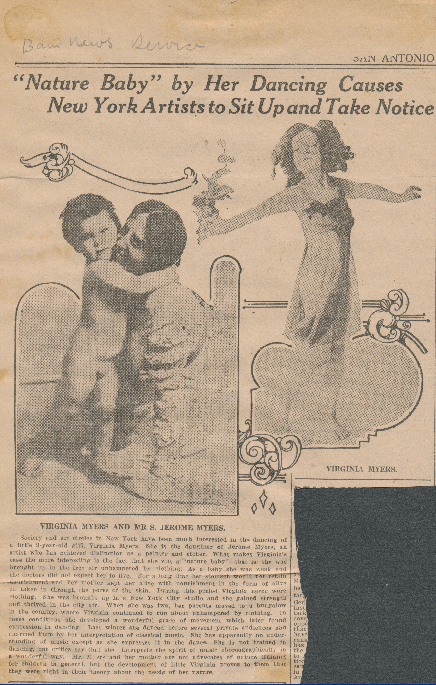
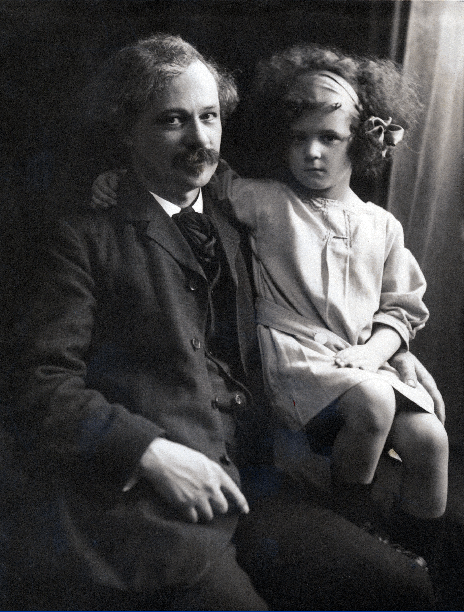
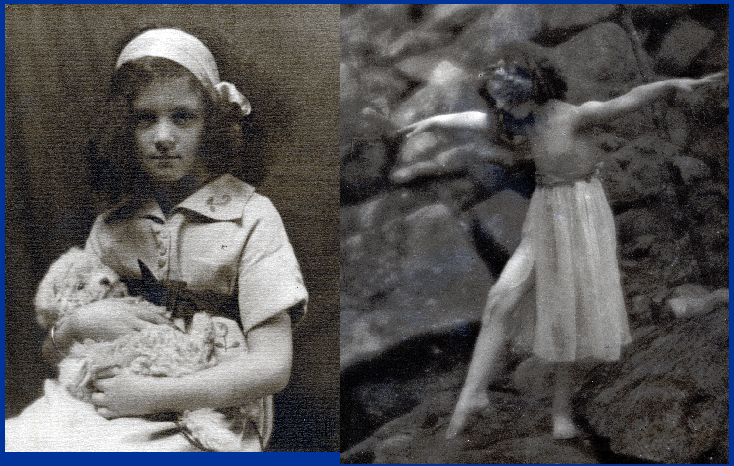
Jerome and Virginia Myers
|
|
|
|
|
|
 |
|
|
|
|
|
|
 |
|
|
|
|
 |
|
|
|
|
|
|
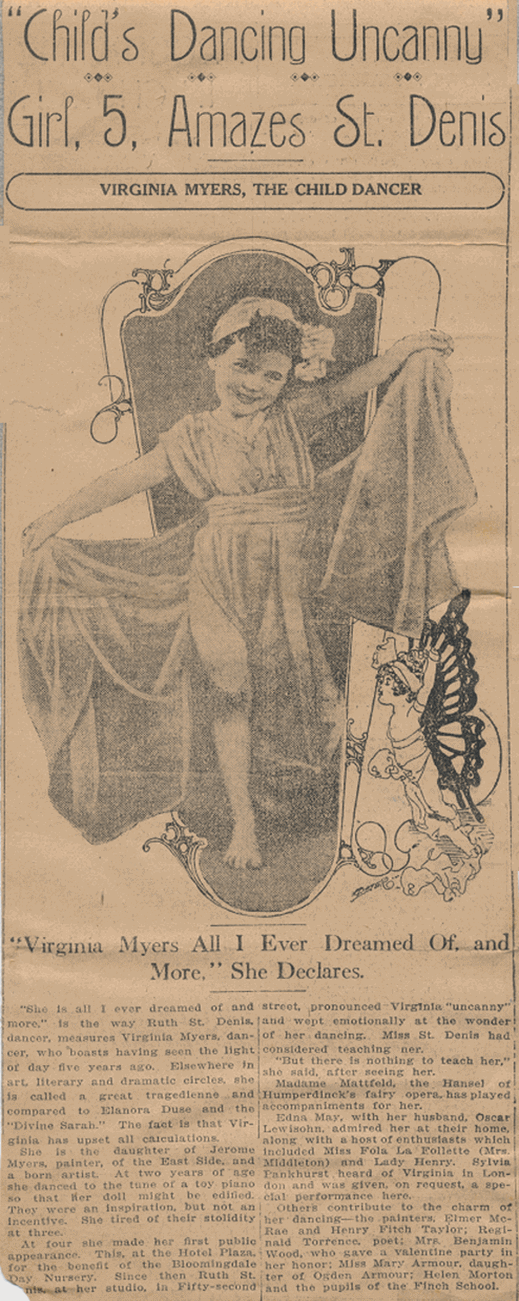
NEW YORK AMERICAN
CHILD’S DANCING UNCANNY”
GIRL, 5, AMAZES ST. DENIS
VIRGINIA MYERS, THE CHILD DANCER
“VIRGINIA MYERS ALL I EVER DREAMED OF, AND MORE,”
SHE DECLARES
“She is all I ever dreamed of and more,” is the way Ruth St. Denis, dancer, measures Virginia Myers, dancer, who boasts having seen the light of day five years ago. Elsewhere in art, literary and dramatic circles, she is called a great tragedienne and compared to Eleonora Duse and the “Divine Sarah.” The fact is that Virginia has upset all calculations.
She is the daughter of Jerome Myers, painter, of the East Side, and a born artist. At two years of age she danced to the tune of a toy piano so that her doll might be edified. They were an inspiration, but not an incentive. She tired of their stolidity at three.
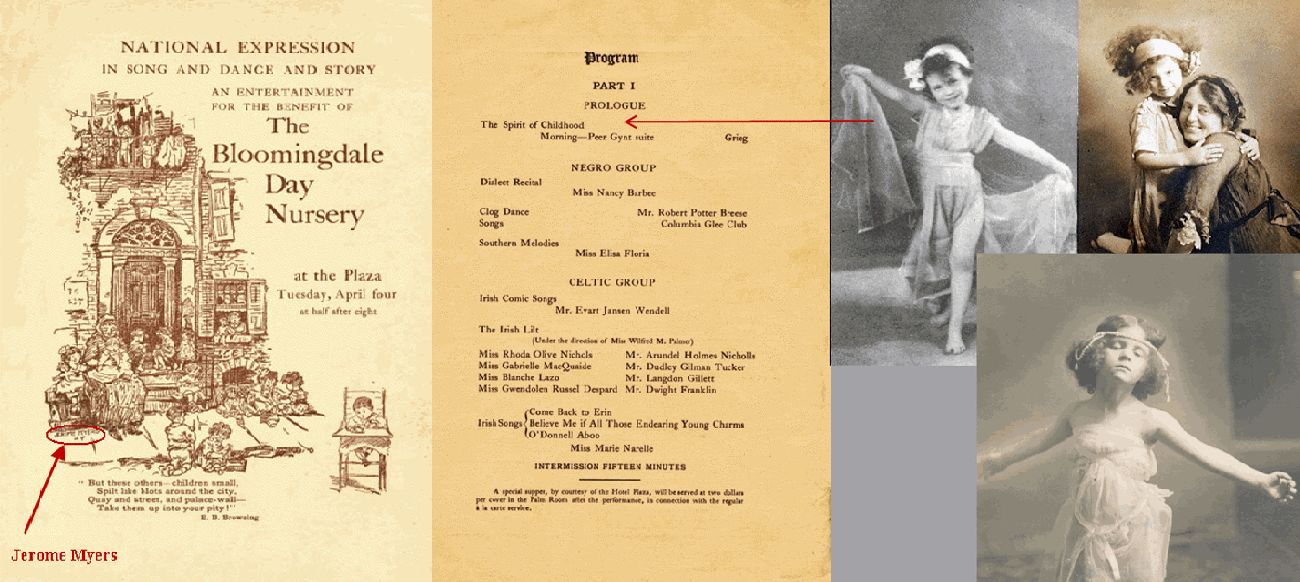
At four she made her first public appearance. This, at the Hotel Plaza for the benefit of the Bloomingdale Day Nursery. Since then Ruth St. Dennis at her studio, in Fifty-second street, pronounced Virginia “uncanny” and wept emotionally at the wonder of her dancing. Miss St. Denis had considered teaching her.
“But there is nothing to teach her,” she said, after seeing her.
Madame Mattfeld, the Hansel of Humperdinck’s fair opera, has played accompaniments for her.
Edna May, with her husband, Oscar Lewisohn, admired her at their home, along with a host of enthusiasts which included Miss Fola La Follette (Mrs. Middleton) and Lady Henry. Sylvia Pankhurst heard of Virginia in London and was given, on request, a special performance here.
Others contribute to the charm of her dancing—the painters Elmer McRae and Henry Fitch Taylor; Reginald Torrence, poet; Mr. Benjamin Wood, who gave a valentine party in her honor; Miss Mary Armour, daughter of Ogden Armour; Helen Morton and the pupils of the Finch School.
|
|
|
|
|
|
|
|
|
 |
|
|
|
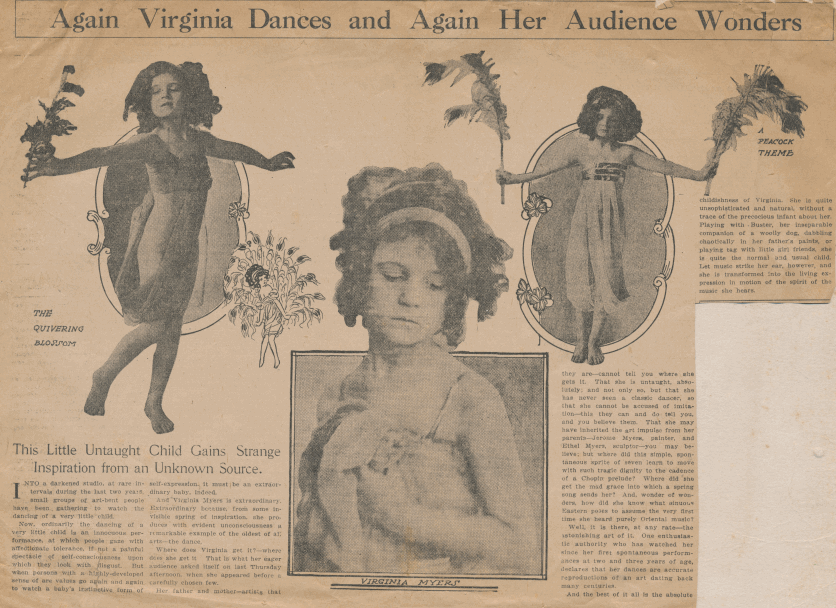
AGAIN VIRGINIA DANCES AND AGAIN HER AUDIENCE WONDERS
This Little Untaught Child Gains Strange
Inspiration from an Unknown Source
Into a darkened studio at rare intervals during the last two years, small groups of art-bent people have been gathering to watch the dancing of a very little child.
Now, ordinarily the dancing of a very little child is an innocuous performance, at which people gaze with affectionate tolerance, if not a painful spectacle of self-consciousness upon which they look with disgust. But when persons with a highly-developed sense of art values go again and again to watch a baby’s instinctive form of self-expression, it must be an extraordinary baby, indeed.
And Virginia Myers is extraordinary. Extraordinary because, from some invisible spring of inspiration, she produces with evident unconsciousness a remarkable example of the oldest of all arts—the dance.
Where does Virginia get it?—where does she get it. That is what her eager audience asked itself on last Thursday afternoon, when she appeared before a carefully chosen few.
Well, it is there, at any rate—the astonishing art of it. One enthusiastic authority who has watched her since her first spontaneous performance at two and three years of age, declares that her dances are accurate reproductions of an art dating back many centuries.
And the best of it all is the absolute childishness of Virginia. She is quite unsophisticated and natural, without a trace of the precocious infant about her. Playing with Buster, her inseparable companion of a woolly dog, dabbling chaotically in her father’s paints, or playing tag with little girl friends, she is quite the normal and usual child. Let music strike her ear, however, and she is transforming into the living spirit of the music she hears.
|
|
|
|
|
|
|
|
|
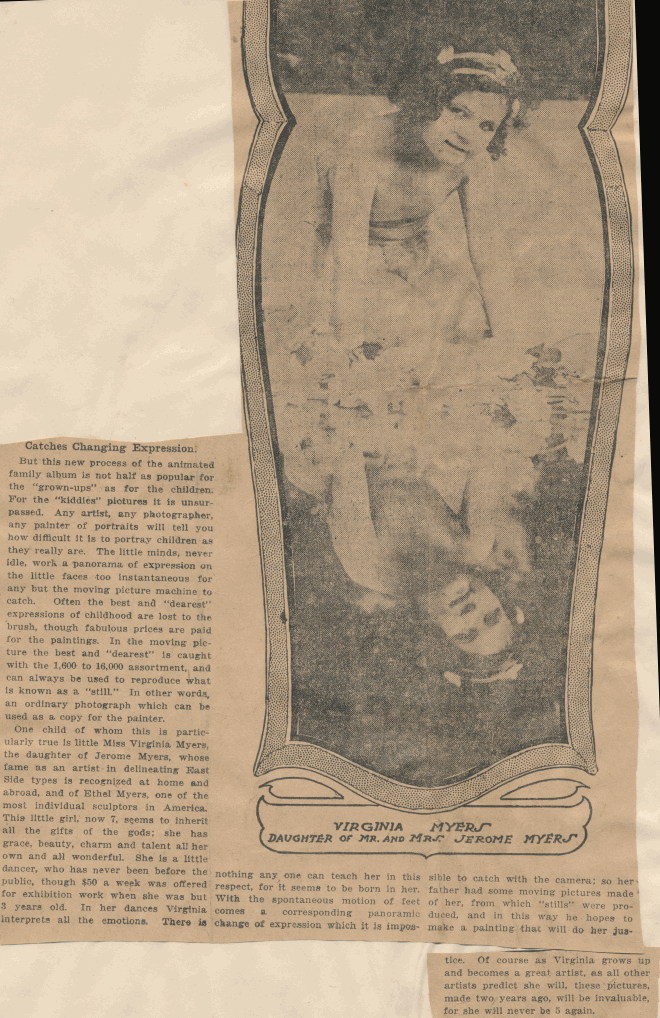
Catches Changing Expression:
But this new process of the animated family album is not half as popular for the grown-ups as for the children. For the kiddies pictures it is unsurpassed. Any artist, any photographer, any painter of portraits will tell you how difficult it is to portray children as they really are. The little minds, never idle, work a panorama of expression on the little faces too instantaneous for any but the moving picture machine to catch. Often the best and dearest expressions of childhood are lost to the brush, though fabulous prices are paid for the paintings. In the moving picture the 1,600 to 16,000 assortment, and can always he used to reproduce what is known as a still. In other words, an ordinary photograph which can be used as a copy for the painter.
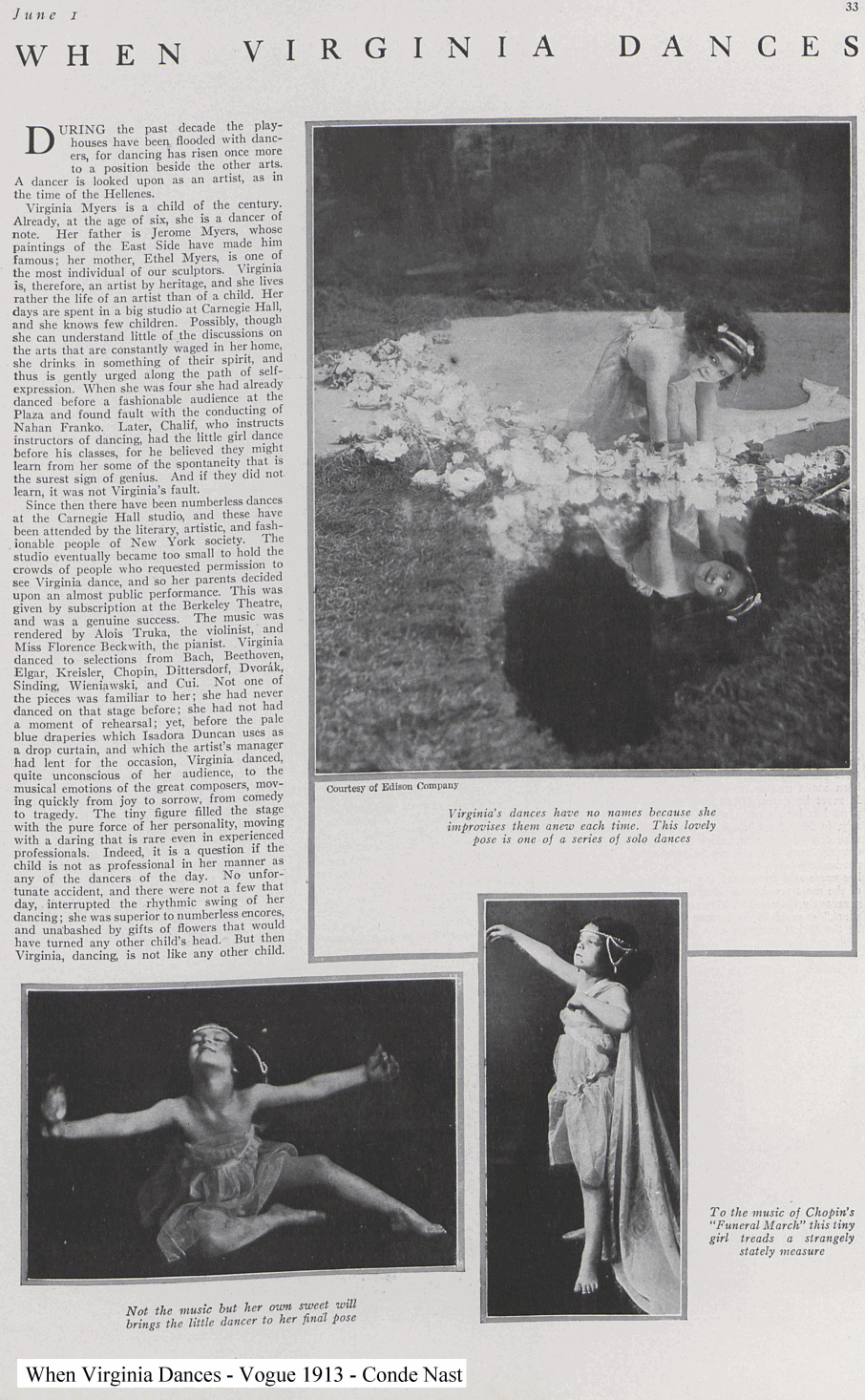
One child of whom this is particularly true is little Miss Virginia Myers, the daughter of Jerome Myers, whose fame as an artist in delineating East Side types is recognized at home and abroad, and of Ethel Myers, one of the most individual sculptors in America. This little girl, now 7, seems to inherit all the gifts of the gods; she has grace, beauty, charm and talent all her own and all wonderful. She is a little dancer, who has never been before the public, though $50 a week was offered for exhibition work when she was but 3 years old. In her dances Virginia interprets all the emotions. There is nothing any one can teach her in this respect, for it seems to be born in her. With the spontaneous motion of feet comes a corresponding panoramic change of expression which it is impossible to catch with the camera; so her father had some moving pictures made of her, from which stills were produced, and in this way he hopes to make a painting that will do her justice. Of course as Virginia grows up and becomes a great artist, as all other artists predict she will, these pictures, made two years ago, will be invaluable, for she will never be 5 again.
|
|
|
|
|
|
|
|
|
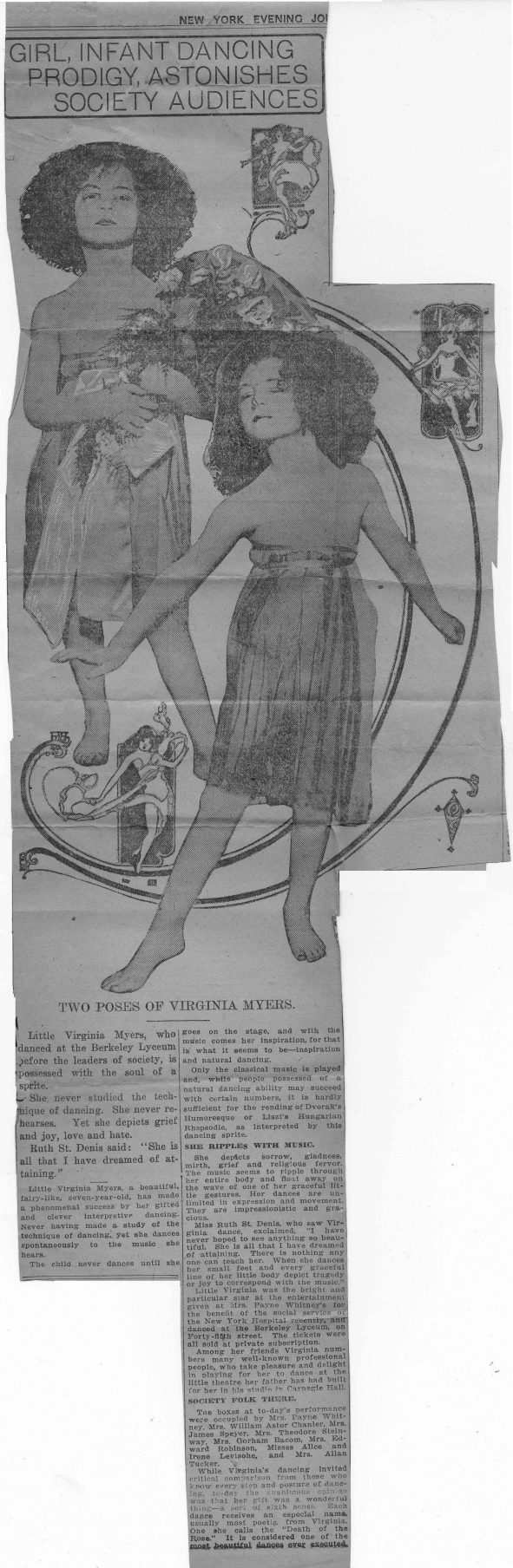
GIRL, INFANT DANCING PRODIGY,
ASTONISHES SOCIETY AUDIENCES
Little Virginia Myers, who danced at the Berkeley Lyceum before the leaders of society, is possessed with the soul of a sprite.
She never studied the technique of dancing. She never rehearses. Yet she depicts grief and joy, love and hate.
Ruth St. Denis said: "She is all that I have dreamed of attaining."
Little Virginia Myers, a beautiful, fairy-like, seven-year-old has made a phenomenal success by her gifted and clever interpretive dancing. Never having made a study of the technique of dancing, yet she dances spontaneously to the music she hears.
The child never dances until she goes on the stage, and with the music comes her inspiration, for that is what it seems to be—inspiration and natural dancing.
Only the classical music is played and while people possessed of a natural dancing ability may succeed with certain numbers, it is hardly sufficient for the rending of Dvorak's Humoresque or Liszt's Hungarian Rhapsodie, as interpreted by this dancing sprite.
SHE RIPPLES WITH MUSIC
She depicts, sorrow, gladness, mirth, grief and religious fervor. The music seems to ripple through her entire body and float away on the wave of one of her graceful little gestures. Her dances are unlimited in expression and movement. They are impressionistic and gracious.
Miss Ruth St. Denis, who saw Virginia dance, exclaimed, "I have never hoped to see anything so beautiful. She is all that I have dreamed of attaining. There is nothing any one can teach her. When she dances her small feet and little body depict tragedy or joy to correspond with the music."
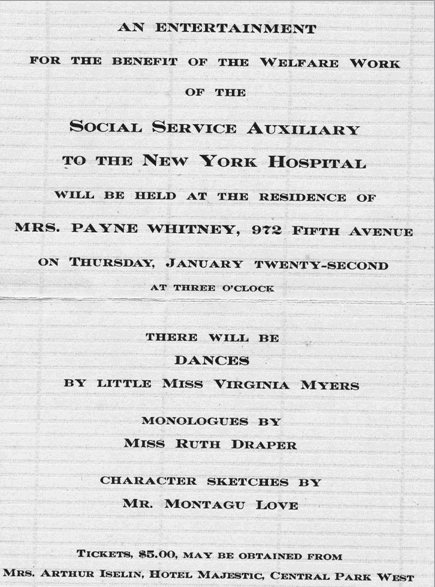
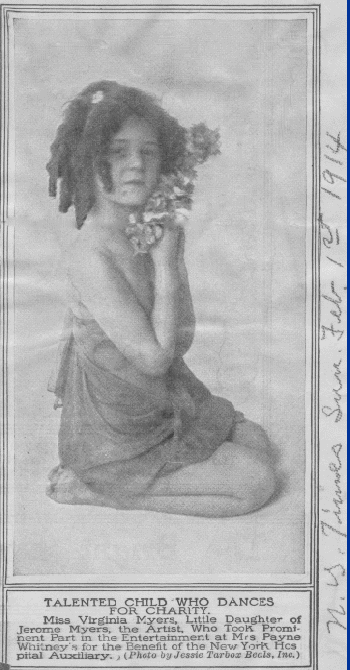
Little Virginia was the bright and particular star at the entertainment given at Mrs. Payne Whitney's for the benefit of the social service of the New York Hospital recently, and danced at the Berkeley Lyceum on Forty-fifth street. The tickets were all sold at private subscriptions.
Among her friends Virginia numbers many well-known professional people, who take pleasure and delight in playing for her to dance at the little theatre her father has had built for her in his studio in Carnegie Hall.
SOCIETY FOLK THERE.
The boxes at to-day's performance were occupied by Mrs. Payne Whitney, Mrs. William Astor Chanler, Mrs. James Speyer, Mrs. Theodore Steinway, Mrs. Gorham Bacom, Mrs. Edward Robinson, Misses Alice and Irene Levisohe, and Mrs. Allen Tucker.
While Virginia's dancing invited critical comparison from those who know every step and posture of dancing, today the unanimous opinion was that her gift was a wonderful thing—a sort of sixth sense. Each dance receives an especial name usually most poetic, from Virginia. One she calls the "Death of the Rose." It is considered one of the most beautiful dances ever executed.
|
|
|
|
|
|
|
|
|
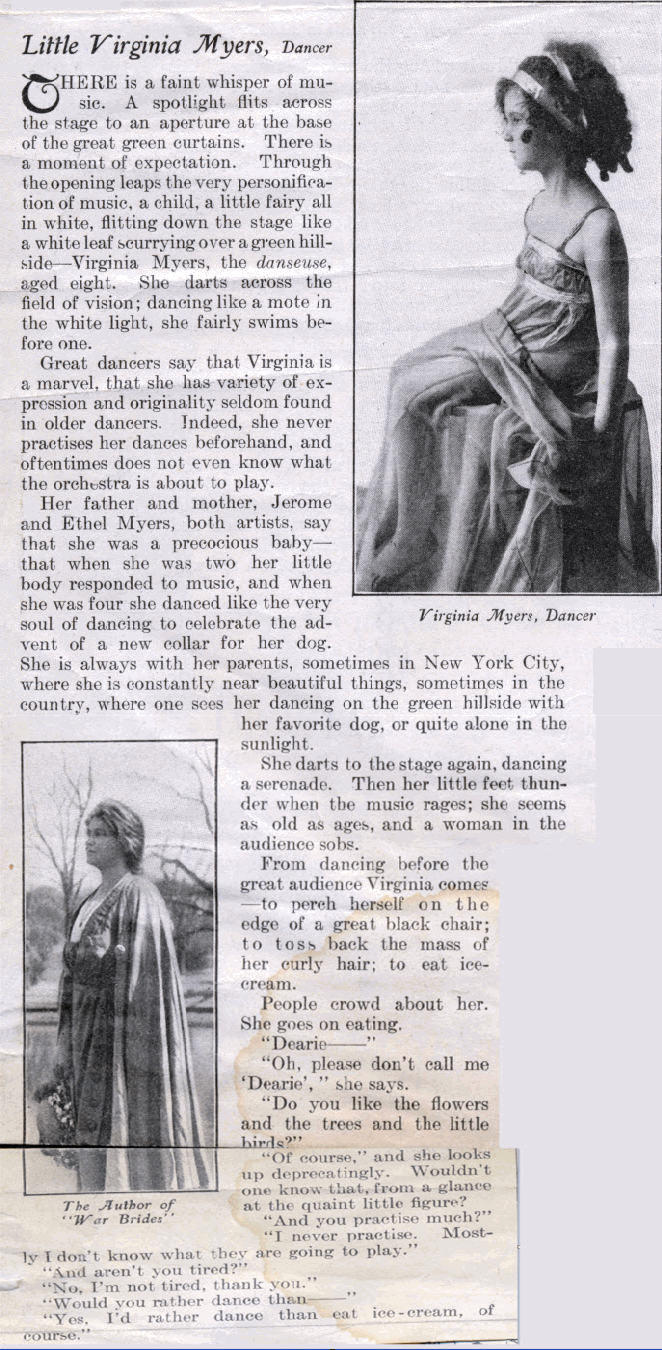
Little Virginia Myers, Dancer
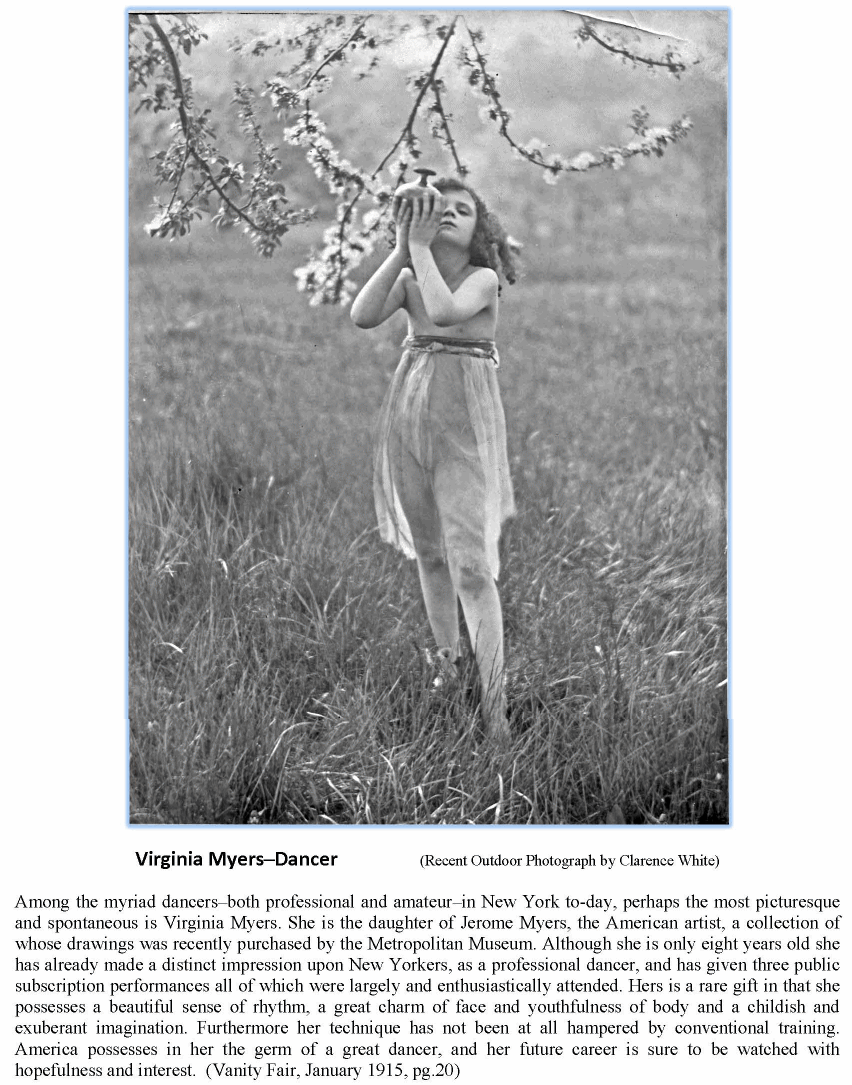
There is a faint whisper of music. A spotlight flits across the stage to an aperture at the base of the great green curtains. There is a moment of expectation. Through the opining leaps the very personification of music, a child, a little fairy all in white, flitting down the stage like a white leaf scurrying over a green hillside—“Virginia Myers, the danseuse, aged eight. She darts across the field of vision; dancing like a mote in the white light, she fairly swims before one.
Great dancers say that Virginia is a marvel, that she has variety of expression and originality seldom found in older dancers. Indeed, she never practices her dances beforehand, and oftentimes does not even know what the orchestra is about to play.
Her father and mother, Jerome and Ethel Myers, both artists, say she was a precocious baby—that when she was two her little body responded to music, and when she was four she danced like the very soul of dancing to celebrate the advent of a new collar for her dog.
She is always with her parents, sometimes in New York City, where she is constantly near beautiful things, sometimes in the country, where one sees her dancing on the green hillside with her favorite dog, or quite alone in the sunlight.
She darts to the stage again, dancing a serenade. Then her little feet thunder when the music rages; she seems as old as ages, and a woman in the audience sobs.
From dancing before the great audience Virginia comes—to perch herself on the edge of a great black chair; to toss back the mass of her curly hair; to eat ice-cream.
People crowd about her. She goes on eating.
“Dearie—”
“Oh, please don’t call me Dearie,” she says
“Do you like the flowers and the trees and the little birds?”
“Of course,” and she looks up deprecatingly. Wouldn’t one know that, from a glance at the quaint little figure?
“And you practice much?”
“I never practice. Mostly I don’t know what they are going to play.”
“And aren’t you tired?”
“No, I’m not tired, thank you.”
“Would you rather dance than—”
“Yes. I’d rather dance than eat ice-cream, of course.”
|
|
|
|
|
|
|
|
|
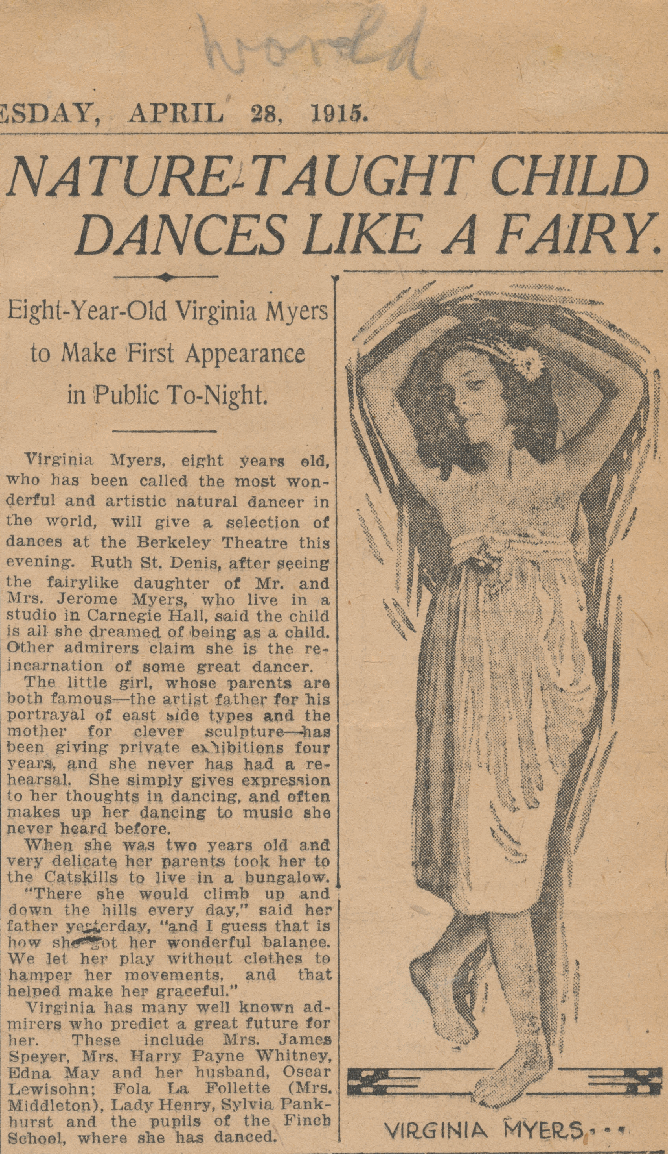
World - April 28, 1915
NATURE-TAUGHT CHILD
DANCES LIKE A FAIRY
* * * * *
Eight-Year-Old Virginia Myers to Make
First Appearance in Public To-Night
Virginia Myers, eight years old, who has been called the most wonderful and artistic natural dancer in the world, will give a selection of dances at the Berkeley Theatre this evening. Ruth St. Denis, after seeing the fairylike daughter of Mr. and Mrs. Jerome Myers, who live in a studio in Carnegie Hall, said the child is all she dreamed of being as a child. Other admirers claim she is the reincarnation of some great dancer.
The little girl, whose parents are both famous—the artist father for his portrayal of east side types and the mother for clever sculpture—has been giving private exhibitions for years, and she never has had a rehearsal. She simply gives expression to her thoughts in dancing, and often makes up her dancing to music she never heard before.
When she was two years old and very delicate her parents took her to the Catskills to live in a bungalow.
“There she would climb up and down the hills every day,” said her father yesterday, “and I guess that is where she got her wonderful balance. We let her play without clothes to hamper her movements, and that helped make her graceful.”
Virginia has many well know admirers who predict a great future for her. These include Mrs. James Speyer, Mrs. Harry Payne Whitney, Edna May and her husband, Oscar Lewisohn; Fola La Follette (Mrs. Middleton), Lady Henry, Sylvia Pankhurst and the pupils of the Finch School, where she danced.
|
|
|
|
|
|
|
|
|
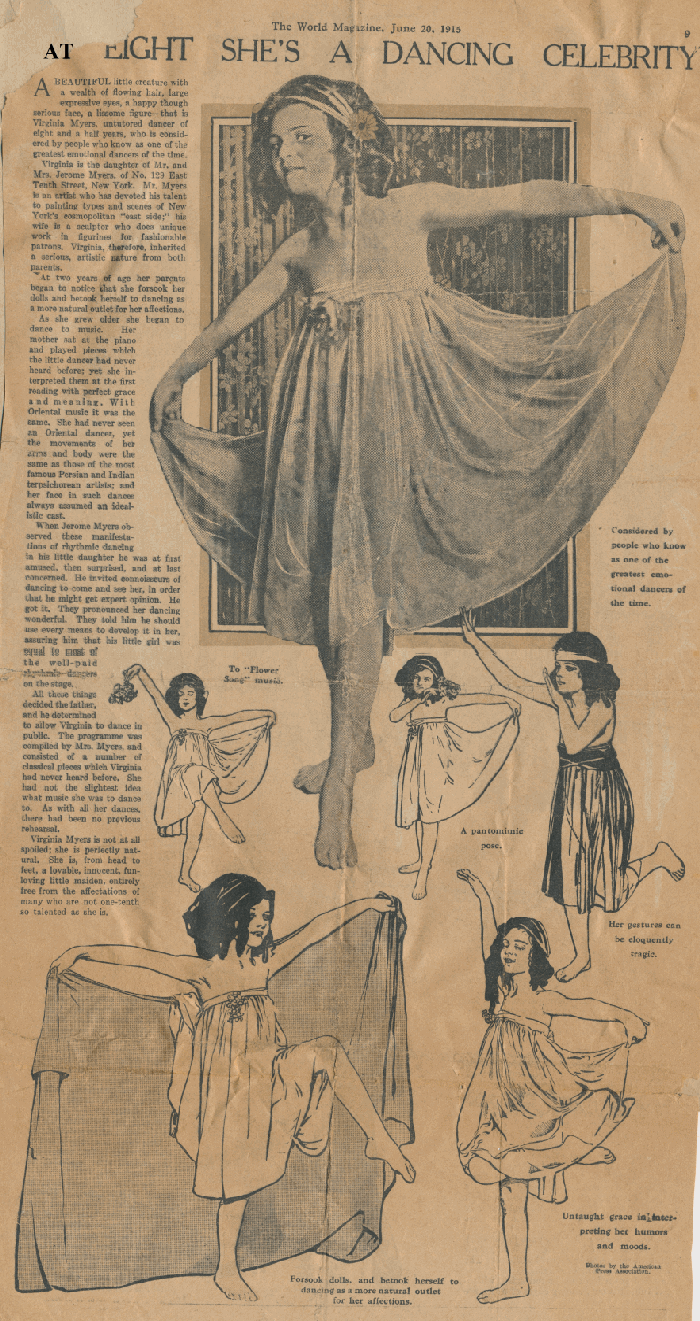
The World Magazine, June 20, 1915
AT EIGHT SHE’S A DANCING CELEBRITY
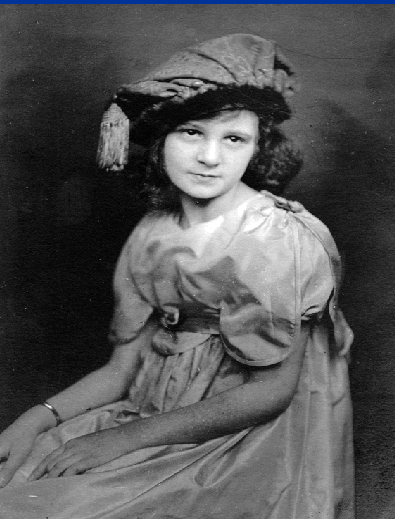
A beautiful little creature with a wealth of flowing hair, large expressive eyes, a happy though serious face, a lissome figure—that is Virginia Myers, untutored dancer of eight and a half years, who is considered by people who know as one of the greatest emotional dancers of the time.
Virginia is the daughter of Mr. and Mrs. Jerome Myers, of No. 129 East Tenth Street, New York. Mr. Myers is an artist who has devoted his talent to painting types and scenes of New York’s cosmopolitan “east side;” his wife is a sculptor who does unique work in figurines for fashionable patrons. Virginia, therefore, inherited a serious, artistic nature from both parents.
At two years of age her parents began to notice that she forsook her dolls and betook herself to dancing as a more natural outlet for her affections.
As she grew older she began to dance to music. Her mother sat at the piano and played pieces which the little dancer had never heard before; yet she interpreted them at the first reading with perfect grace and meaning. With Oriental music it was the same. She had never seen an Oriental dancer, yet the movements of her arms and body were the same as those of the most famous Persian and Indian terpsichorean artists; and her face in such dances always assumed an idealistic cast.
When Jerome Myers observed these manifestations of rhythmic dancing in his little daughter he was at first amused, then surprised, and at last concerned. He invited connoisseurs of dancing to come and see her, in order that he might get expert opinion. He got it. They pronounced her dancing wonderful. They told him he should use every means to develop it in her assuring him that his little girl was equal to most of the well-paid rhythmic dancers on the stage.
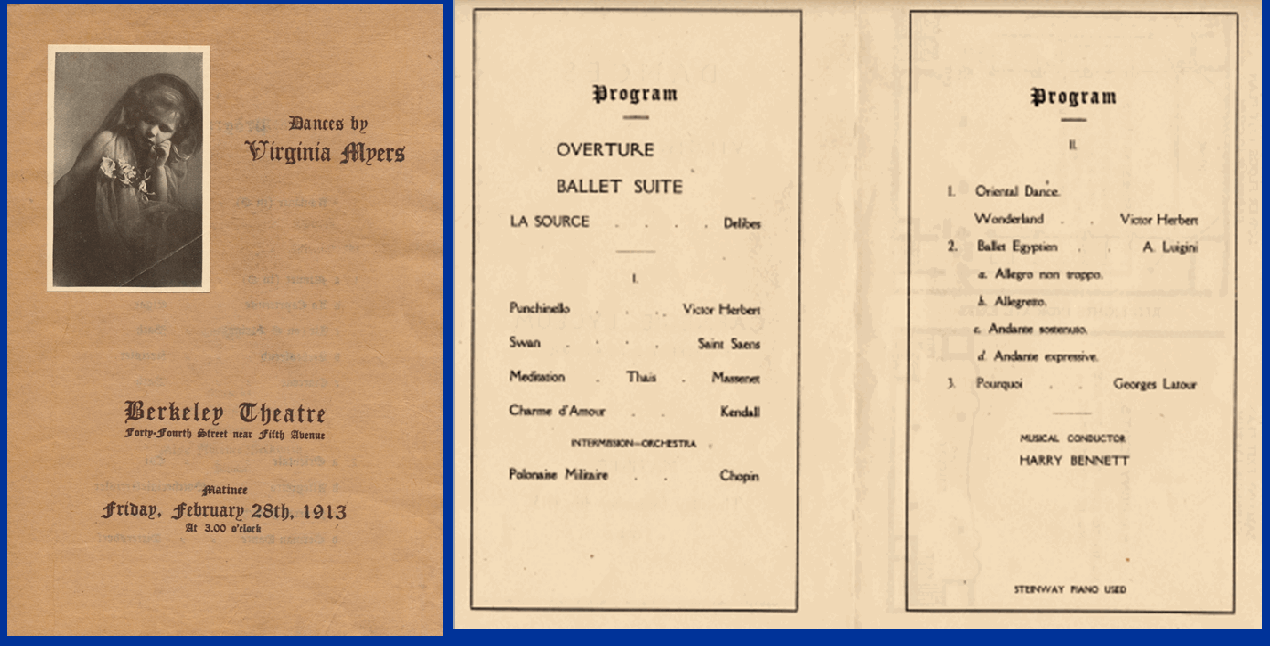
All these things decided the father and he determined to allow Virginia to dance in public. The programme was compiled by Mrs. Myers, and consisted of a number of classical pieces which Virginia had never heard before. She had not the slightest idea what music she was to dance to. As with all her dances, there had been no previous rehearsal.
Virginia Myers is not at all spoiled; she is perfectly natural. She is from head to feet, a lovable innocent, fun-loving little maiden, entirely free from the affectations of many who are not one-tenth so talented as she is.
|
|
|
|
|
|
|
|
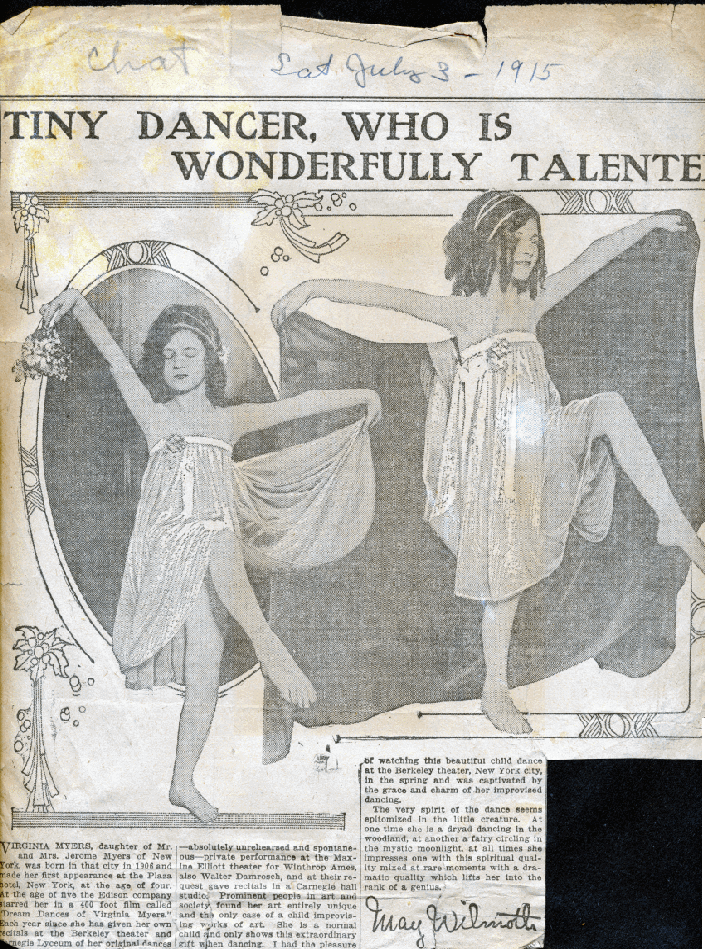
Chat, Sat, July 3, 1915
TINY DANCER, WHO IS
WONDERFULLY TALENTED
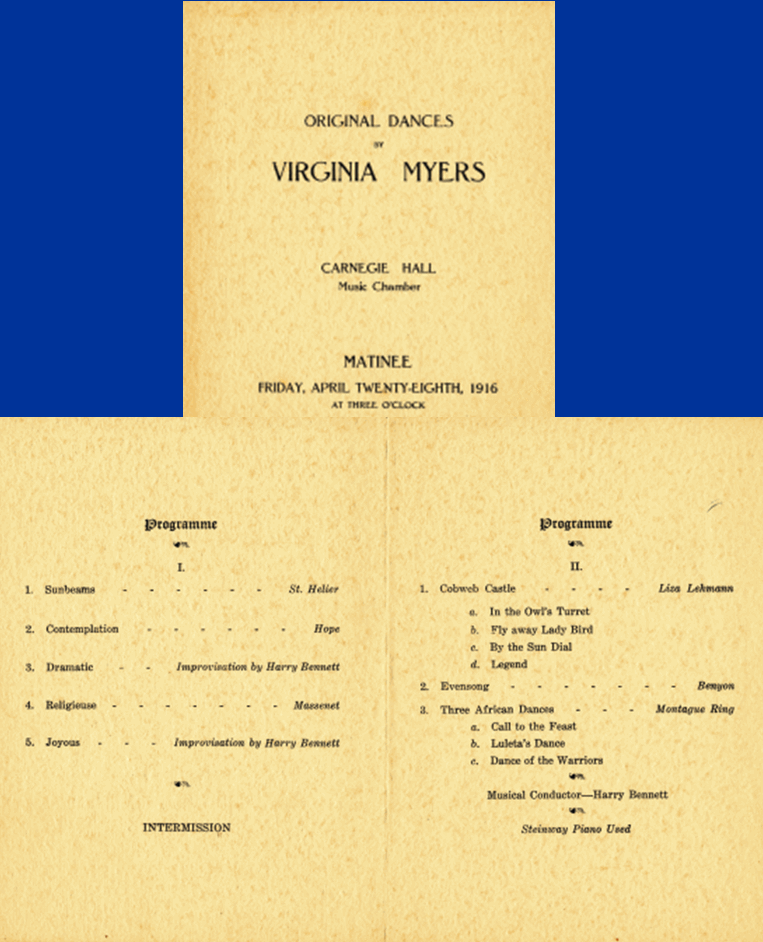
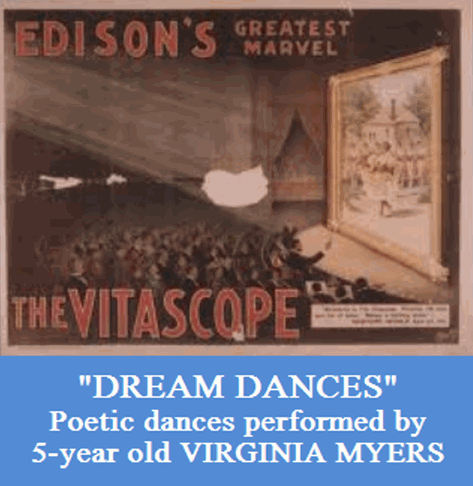
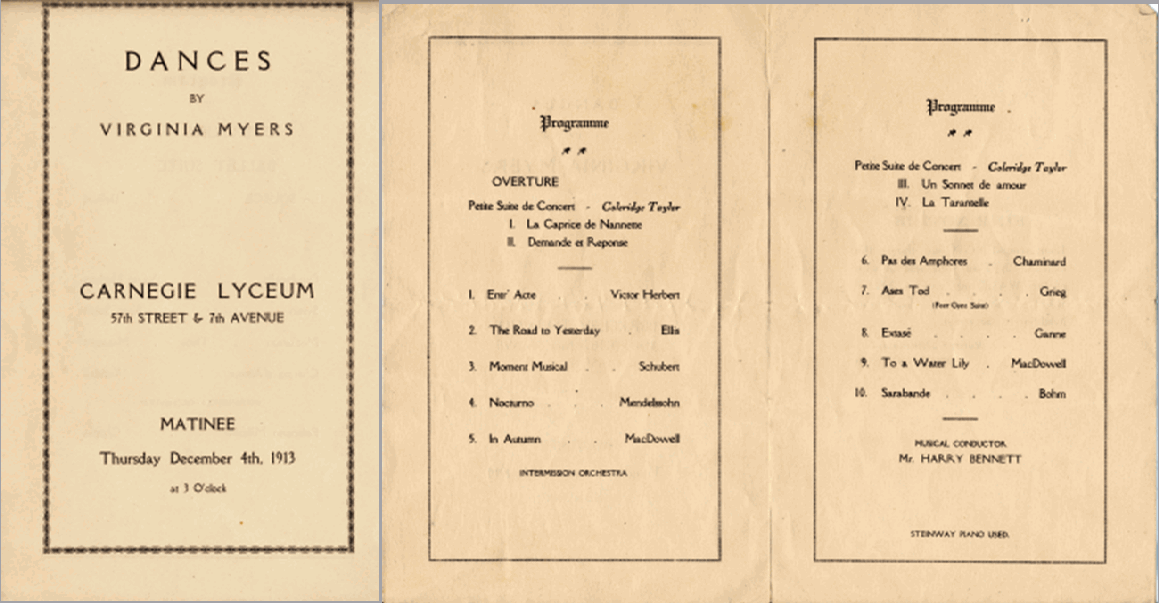
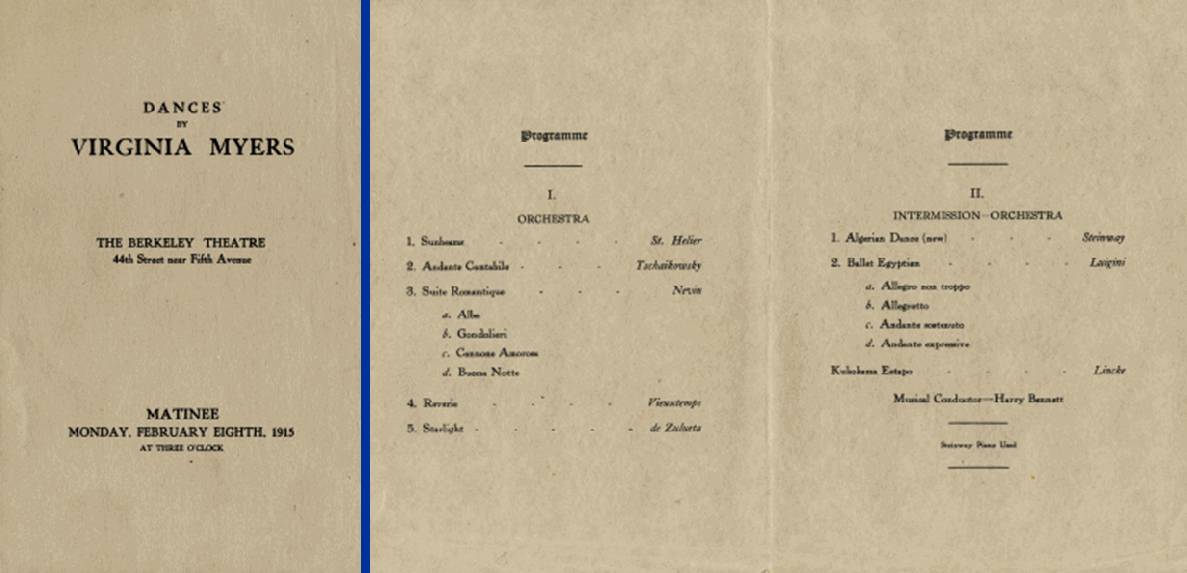
VIRGINIA MYERS, daughter of Mr. and Mrs. Jerome Myers of New York, was born in that city in 1906 and made her first appearance at the Plaza Hotel, New York, at the age of four. At the age of five the Edison Company starred her in a 400 foot film called “Dream Dances of Virginia Myers.” Each year since she has given her own recitals at the Berkeley Theater and Carnegie Lyceum of her original dances absolutely unrehearsed and spontaneous—private performance at the Maxine Elliot Theater for Winthrop Ames, also Walter Damrosch, and at their request gave recitals in a Carnegie Hall studio. Prominent people in art and society found her art entirely unique and the only case of a child improvising works of art. She is a normal child and only shows this extraordinary gift when dancing. I had the pleasure of watching this beautiful child dance at the Berkeley Theater, New York city, in the spring and was captivated by the grace and charm of her improvised dancing.
The very spirit of the dance seems epitomized in the little creature. At one time she is a dryad dancing in the woodland, at another a fairy circling in the mystic moonlight, at all times she impressed one with this spiritual quality mixed at rare moments with a dramatic quality which lifts her into the rank of a genius.
May Wilmoth
|
|
|
|
|
|
|
|
 |
|
|
(N. Y. SUN)
NINE YEAR-OLD
WINS LAURELS
AS A DANCER
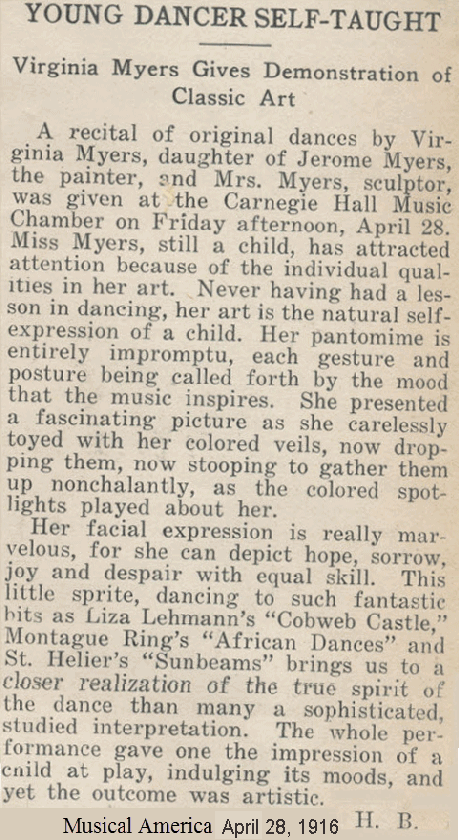
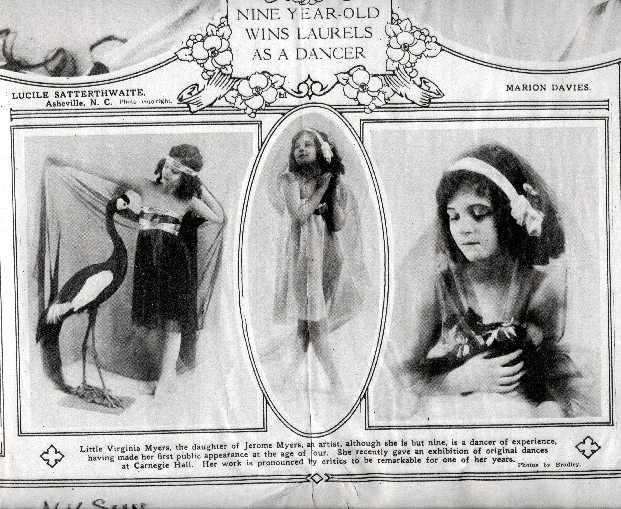
Little Virginia Myers, the daughter of Jerome Myers, an artist, although she is but nine, is a dancer of experience having made her first public appearance at the age of four. She recently gave an exhibition of original dances at Carnegie Hall. Her work is pronounced by critics to be remarkable for one of her years.
|
|
|
|
|
|
|
Once young Virginia Myers turned 13 something rather surprising happened in her career. Instead of her regular two-a-year schedule of giving dance concerts in various New York theaters, that would all stop for the next three years. There would suddenly be no more public concerts. The sole explanation in the records is a statement written by her mother, Ethel Myers, that read as follows: “For the three intervening years Virginia studied at the Art Student's League, making many compositions of the figure in dance; also studied at the Metropolitan Museum of Art, New York; and at the New York College of Music she studied harmony, to give her originality a background; so that with her sixteenth year she could give dance concerts of her own creations, both here and abroad.”
So when we next meet Virginia, she will be 16, the year will be 1923, and much will be changing …
|
|
|
|













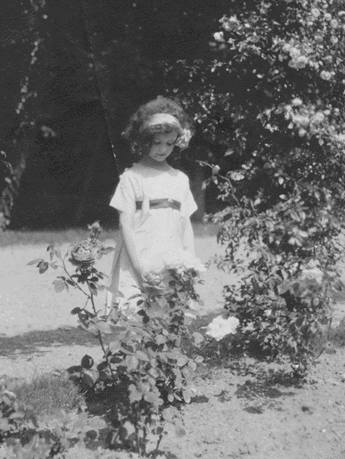 yet appeared in public. She gave an entertainment at the chateau of Eugene Ullman recently, and surprised her audience by the manner in which she used an Old World background to enhance the dramatic effects of her dances.”