|
|
|
1923 & After
|
|
|
|
|
|
|
|
|
|
|
|
|
|
|
|
 |
|
|
|
MYERS SPOTLIGHTS HIS DANCING DAUGHTER
(New York World, Feb 4, 1923)
By Richard Leonard
(A drawing by Herb Roth of the studio performance with George Bellows, Mr. & Mrs. John Sloan, Adele Klaer, David Robinson and Mrs. Robert Henri in the audience and Jerome Myers on spotlight and Mrs. Jerome Myers ready at the phonograph. On stage, their daughter Virginia Myers appears on the stage in costume.)
The walls of one end of Jerome Myers’ Studio were covered by long curtains that hung from the ceiling and formed a kind of stage setting. The artist himself sat before an inverted drawing-board. In it had been cleverly concealed a spotlight that was later to illumine the stage in a soft glow. Mrs. Myers stood in one corner by a phonograph, ready for the proper cue.
The audience sat on boards, piled up bleacher-like and facing the improvised proscenium. It might have been a “first night” audience, for it was made up of a dozen or more of artists, painters, and sculptors, each famous in his own line.
Hush! The whispering stopped and all eyes turned to the curtains. Myers clicked his light with nervous fingers. His wife busied herself with the phonograph needles. Suddenly there was darkness. The music started. Then the spotlight caught a rift in the curtains and out danced little Virginia Myers, the sixteen-year-old daughter of the artist, who proceeded to give an entire program of her own dance creations.
The girl began dancing before she was big enough to reach to her father’s sketch board and had planned the setting for her entertainment to her parent’s friends. The draped walls, the pale blue glow of the spotlight on the lithe dancing figure, the soft music, all synchronized to give the audience a perfect illusion of the theatre in a room but twenty feet square.
|
|
|
|
|
|
 |
|
|
|
|
 |
|
|
|
|
|
|
Some Facts:
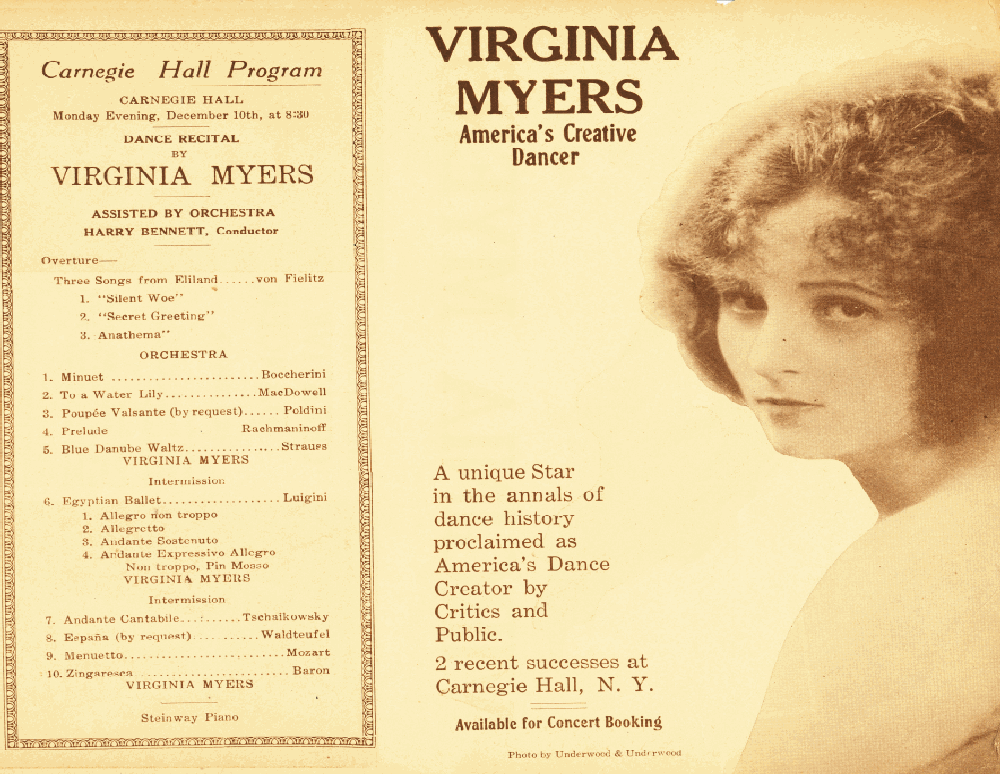
This was the first time the child labor laws would now allow Virginia at 16 to star and create her own dances on Carnegie Hall’s main stage.
Harry Bennett, who conducted this orchestra, actually conducted 4-year-old Virginia’s first public performance at the Plaza Hotel and almost every other theatre performance thereafter.
The evening was broken into three acts with an Orchestra selection played at the start of each act. After that Virginia would take the stage for the rest of each act changing into a variety of costumes that might best fit the mood of the music.
Her assignment at 16 required that she be able to hold the stage alone and improvise her own dances to the music for a period of close to two hours.
|
|
|
|
|
|
|
|
|
|
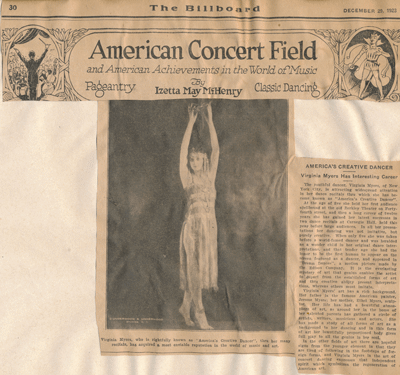
AMERICA’S CREATIVE DANCER 1923
Virginia Myers Has Interesting Career
By Izetta May McHenry, Billboard
The youthful dancer, Virginia Myers, of New York City, is attracting widespread attention in her dance recitals thru which she has become known as “America’s Creative Dancer.”
At the age of five she held her first audience spellbound at the old Berkeley Theater on Forty-fourth Street, and thru a long career of twelve years she has gained her latest successes in two dance recitals at Carnegie Hall, held this year before large audiences. In all her presentations her dancing was not imitative, but purely creative. When only five she was taken before a world-famed dancer and was heralded as a wonder child in her original dance interpretations, and at that tender age she had the honor to be the first human to appear on the screen featured as a dancer, and appeared in “Dream Dances,” a motion picture made by the Edison Company. It is the everlasting mystery of art that genius enables the artist to depart from the established forms of art and thru creative ability present interpretations, whereas others must imitate.
Virginia Myers’ art has a rich background. Her father is the famous American painter, Jerome Myers; her mother, Ethel Myers, sculptor. Her life has had a beautiful atmosphere of art, as around her in the home of her talented parents has gathered a circle of artists, writers, musicians and actors. She has made a study of all forms of art as a background to her dancing and in this form of art her beautifully proportioned body gives full play to all the genius of her soul.
In the other fields of art there are hopeful signs from the younger element in that they are tired of following in the footsteps of foreign forms, and Virginia Myers in the art of concert dancing expresses that independent spirit which symbolizes the regeneration of American art.
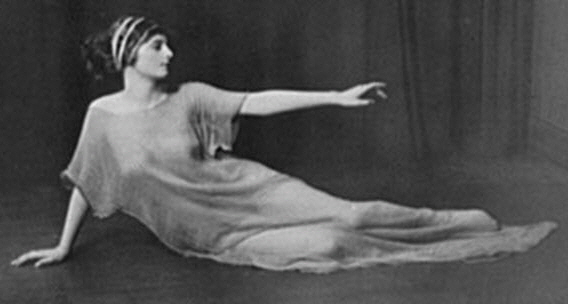
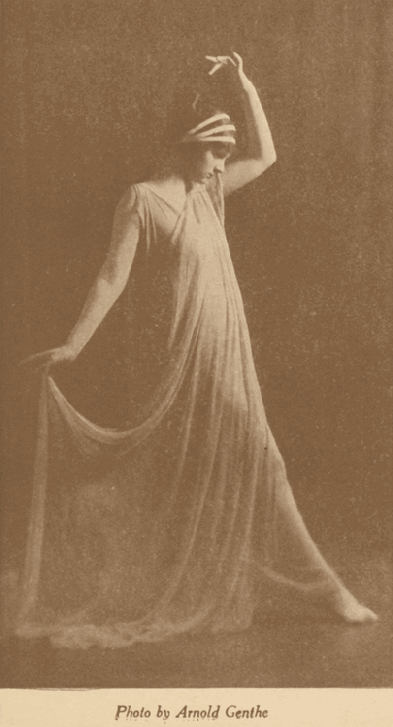
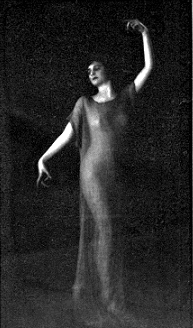
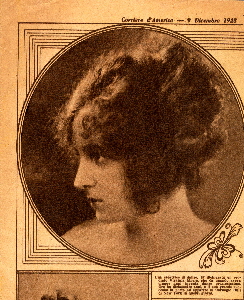
(Picture with legend above) Virginia Myers, who is rightfully known as “America’s Creative Dancer,” thru her many recitals, has acquired a most enviable reputation in the world of music and art.
|
|
|
|
|
|
Musical Courier – April 12, 1923
VIRGINIA MYERS
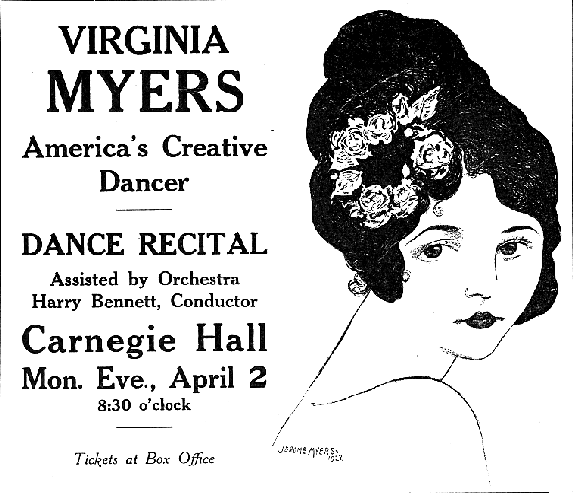
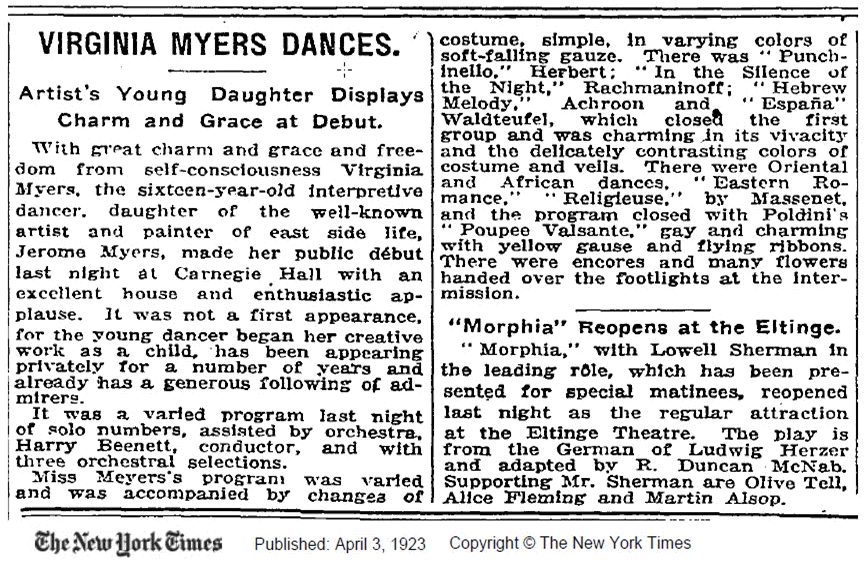
Typifying youth and grace, the slender Virginia Myers, classic dancer, presented a program of varying features at Carnegie Hall, April 2. At the outset due credit should be given Harry Bennett and his orchestra of nine players for their playing was a pronouncedly excellent feature of the affair; indeed, it was quite astonishing to hear the tonal volume and variety, allied with truly expressive playing, issuing from the limited number! They played as solo selections a cavatina and sarabande by Bohn, Indian Summer by Herbert, and the various dance numbers. These were beautifully done by the youthful dancer; it was refreshing to see and hear a Spanish dance without the usual trimmings of castanets, tambourines, etc. and the serious Hebrew Melody (Achron) was also well presented. A series of Oriental dances gave the dancer opportunity to display original costumes and headdress, as well as postures of infinite grace and meaning. The evening closed with the prelude (Rachmaninoff), Eastern Romance (Rimsky-Korsakoff), Religeuse (Massenet) and Dancing Doll (Poldini), and the fair dancer was overwhelmed with flowers.
|
|
|
|
|
|
|
|
VIRGINIA MYERS DANCES - Herald, N.Y.
American Girl’s Program Fills an Evening at Carnegie
Miss Virginia Myers, an accomplished young American dancer, held the attention of her audience by versatile inter- pretations throughout an entire evening at Carnegie Hall last night.
Miss Myers, appearing with orchestra, danced a long and varied program. In the first group of impressions Rachmaninoff’s “In The Silence of the Night” and a “Hebrew Melody” by Achron. It was easy to see that Miss Myers has studied to make her natural sensitiveness the vehicle for the moods of music. “Espana,” a volatile ecstasy by Waldteufel, was full of the sensuous and innocent joy of life.
The most subtle feats of the program were the Orientale and African dances of the second group. These were executed almost entirely by the medium of the hands and arms with an expression from which an unfortunate choice of costume could not detract. The feature of the last group was the pensive and reserved dance to Maswsenet’s Religieuse,” lovely in tone and feeling.
Miss Myers is the daughter of Mr. and Mrs. Jerome Myers respectively, painter and a sculptress. What intuition that she lends, therefore, to her physical attributes is not unnatural.
|
|
|
|
 |
|
|
|
|
|
|
|
|
Some Facts:
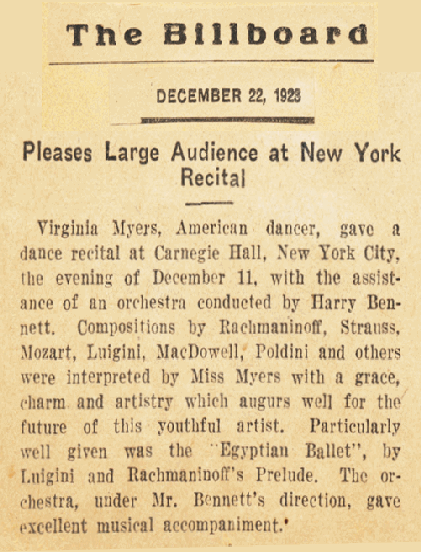
Virginia’s birthday was Oct 21, 1906, which means tonight for her 2nd recital, she’s now a 17-year- old-dancing on the famous stage at Carnegie Hall.
Also this is a new selection of music none of which were in the earlier Carnegie show. The evening is still separated into three acts, but here the orchestra only plays to introduce the first act.
It’s interesting to note the music for the second act (Egyptian Ballet) was the same music the 7-year-old Virginia danced to in her first appearance ten years before at the Berkeley Theatre in New York City on Feb 28, 1913.
|
|
|
|
|
|
|
|
|
The New Yorker Volkszeitung of December 16, 1923
By Mrs. Clara Ruge, Dramatic and Musical Critic.
(Excerpt) Last Monday for the second time, Virginia Myers, the charming daughter of Jerome Myers, the artist, entertained in a program of Dances in Carnegie Hall. The young lady is unusually beautiful and still possesses the subtle allurements of unspoilt youth. Her body melts into delightful forms. In every way she shows more development since last year. Not only in her figure but also in her Art. She shows deeper understanding and more expression. To interpret the great variety of musical selections without technical accomplishment, there undoubtedly must exist an extraordinary amount of talent.
Translated by L. S. R.
|
|
|
|
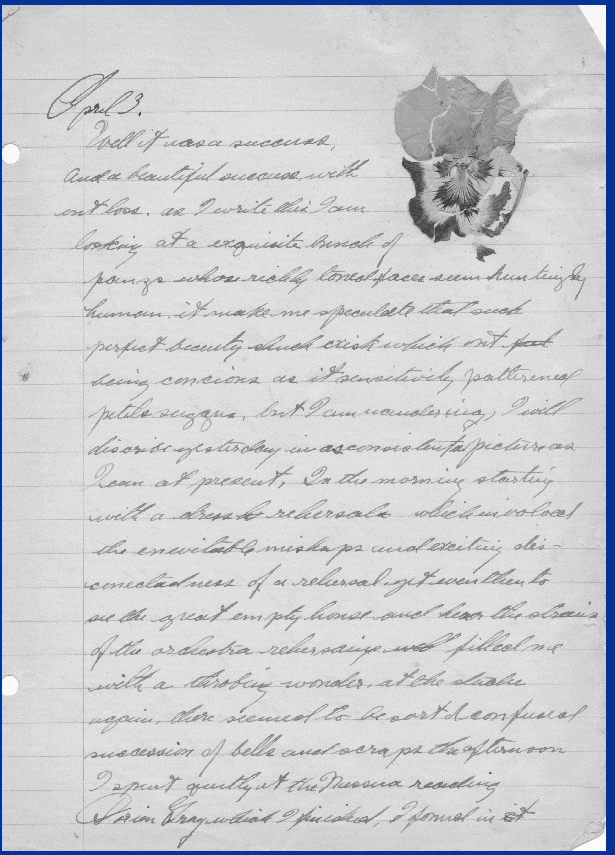
Here’s a literary footnote from Virginia’s Carnegie performancse in 1923. It’s a poem written and typed by the famous photographer, Jessica Tarbox Beals, who had hand-written a poem 9 years earlier in 1914 about seeing Virginia dance for the first time. That other poem is contained in the “Letters” portion of this web site.
|
|
|
|
|
Virginia now is 18, has had to learn how to actually dance in shoes, how to rehearse and dance to choreography created by others. She never before had anyone to lift her up, or twirl her, or hold her in their arms as they danced a waltz. She never knew what a time step was, or how a tap routine was put together. Everything had to be new for her to learn and ask any trained dancer and they’ll tell you how damned hard that is when up against the competition.
|
|
|
|
|
|
|
The real question is why would she have ever chosen to turn in this direction with her career. Was it her choice? What was there to gain in giving up so much? We’ll try to take a few educated guesses later in this site as to what the reasons might have been.
|
|
|
|
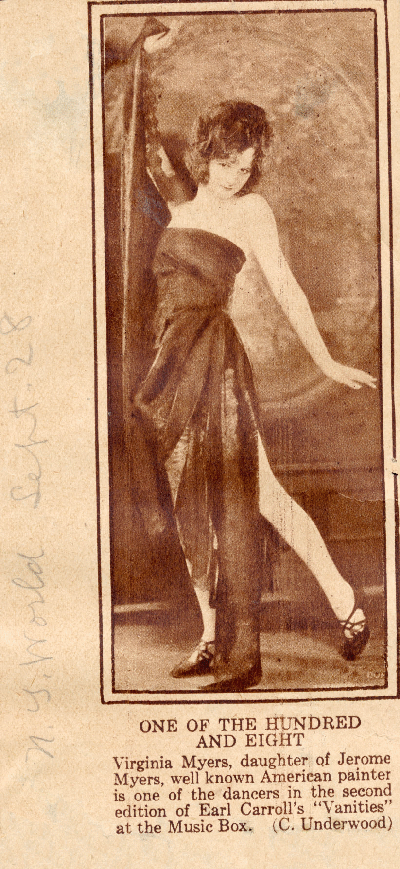
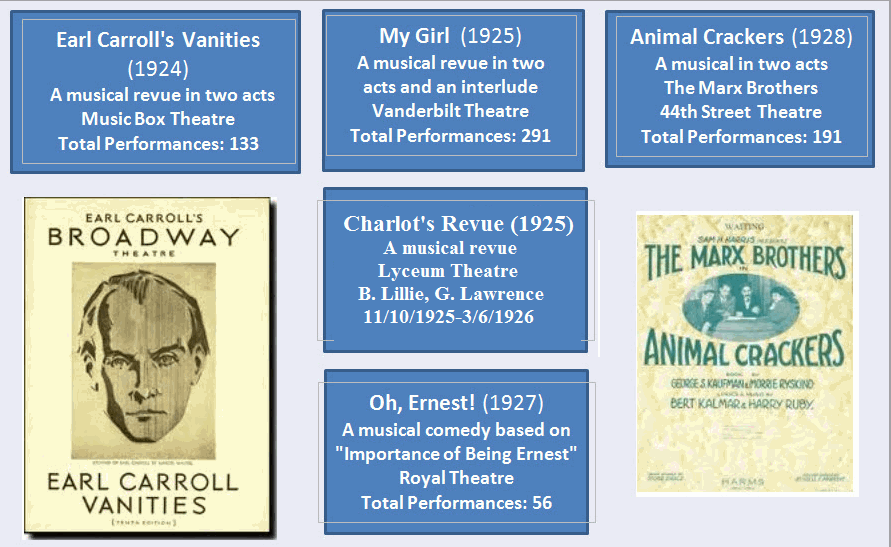
One thing we can see below is how well she managed to stay working in that rough-and- tumble business over the next five years. She got cast in five Broadway shows, four of which where successes. Only “Oh, Ernest!,” a musical comedy based on the popular Oscar Wilde play “Importance of Being Ernest.” closed after 56 performances. Still it’s probable that her fondness for the great Oscar Wilde continued.
|
|
|
|
|
|
|
|
|
|
|
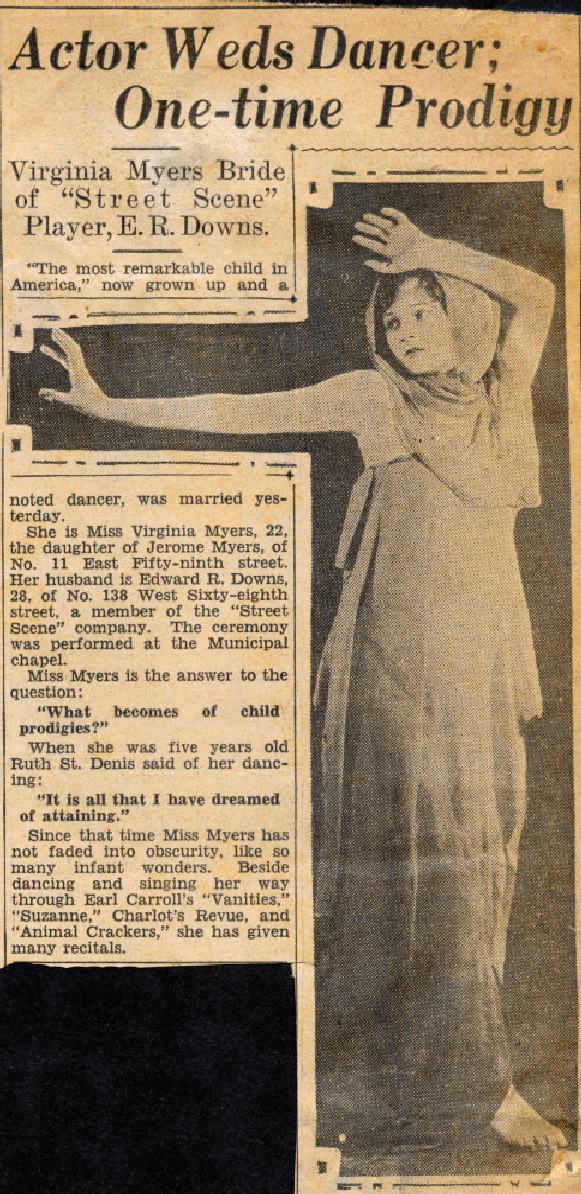
Miss Virginia Myers, daughter of Mr. and Mrs. Jerome Myers, whose summer home is at Lake Gilead, recently became the bride of Edward R. Downes, a member of the “Street Scene” company. The ceremony was performed at the Municipal chapel in New York City.
The bride spent the summers of her girlhood at Lake Gilead and was known as “the most remarkable child in America” and as a child dancer won Ruth St. Denis’s praise. This was when the bride was five years old. Since that time Miss Myers has not faded into obscurity, like so many infant wonders. Besides dancing and singing her way through “Earl Carroll’s Vanities,” “Suzanne,” Charlotte’s Revue and “Animal Crackers,” she has given many recitals.
|
|
|
We did not find evidence of any further recitals that Virginia gave in the documents that were found. It’s always possible, but they would not have probably been anything where a theatre was booked for a solo performance. Still the best guess is that she had turned her back forever from that period of her life and its accomplishments.
|
|
|
|